
Private-label incontinence lines
Compare taped briefs, pull-up pants or pads around absorbency, fit, materials and retail presentation.
MoleSupply helps importers, brands and distributors structure adult incontinence requirements before factory research, samples and commercial decisions.
Product claims, MOQ, price, documents, testing and lead time depend on the approved specification and destination market.
✓Taped, pull-up or pad format
✓Size and waist range
✓Absorbency and material direction
✓Pack format, quantity and destination
A credible factory review makes format, sizing, performance, materials, packaging and evidence visible.
Compare taped briefs, pull-up pants or pads around absorbency, fit, materials and retail presentation.
Organize size range, pack configuration, carton data, documentation and supply questions for a target market.
Translate use scenarios and performance requirements into a consistent supplier comparison brief.
The process reduces false price comparisons caused by different cores, dimensions, materials, pack formats and quality assumptions.
Read the related sourcing guide →Confirm taped brief, pull-up or pad, user profile, size range, waist reference and destination market.
Set questions for absorption, acquisition, leakage protection, fastening, breathability and skin-contact materials.
Compare factories using the same specification, pack requirements, MOQ, sample and evidence questions.
Review construction, dimensions, performance direction, packaging proof and production checkpoints.
Real Companylove product and packaging examples, shared with brand-owner permission. Specifications, claims, MOQ, price, documents and current capacity require project confirmation.
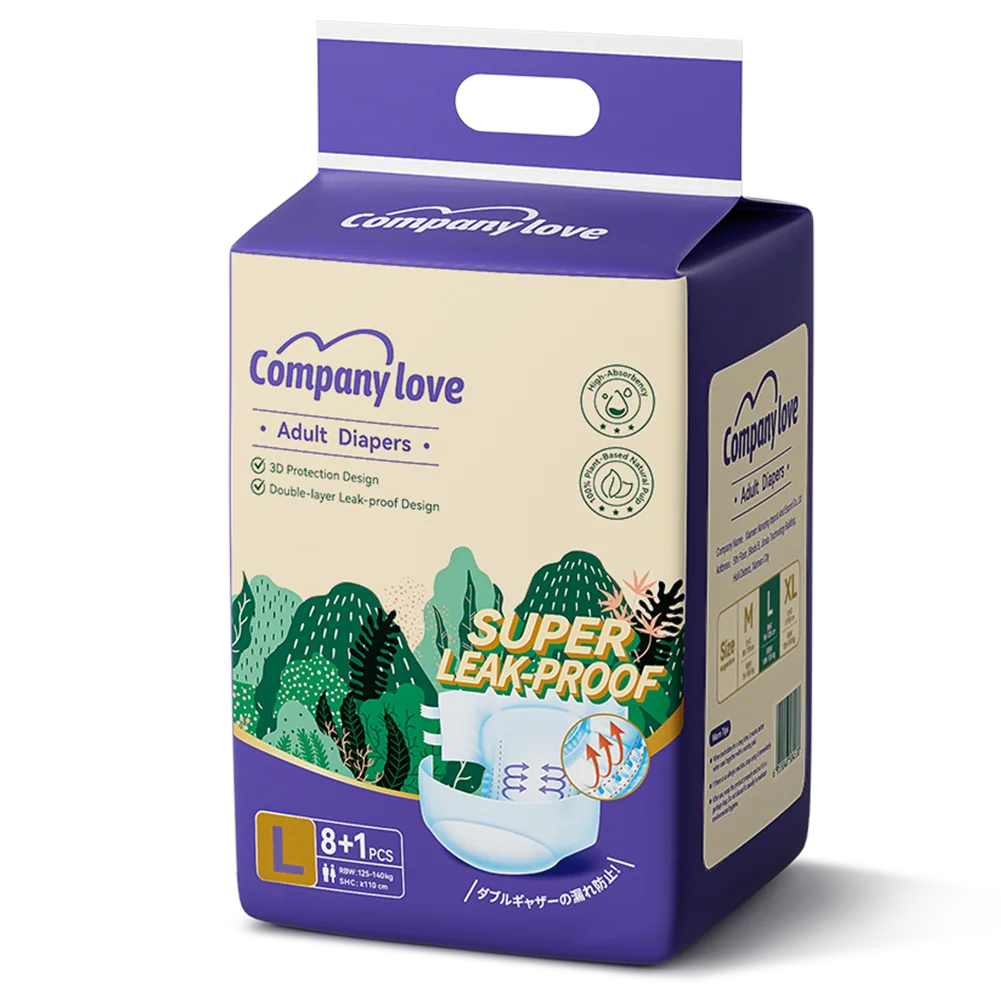
A real adult-care pack direction showing format, size, pack count and branded retail presentation.
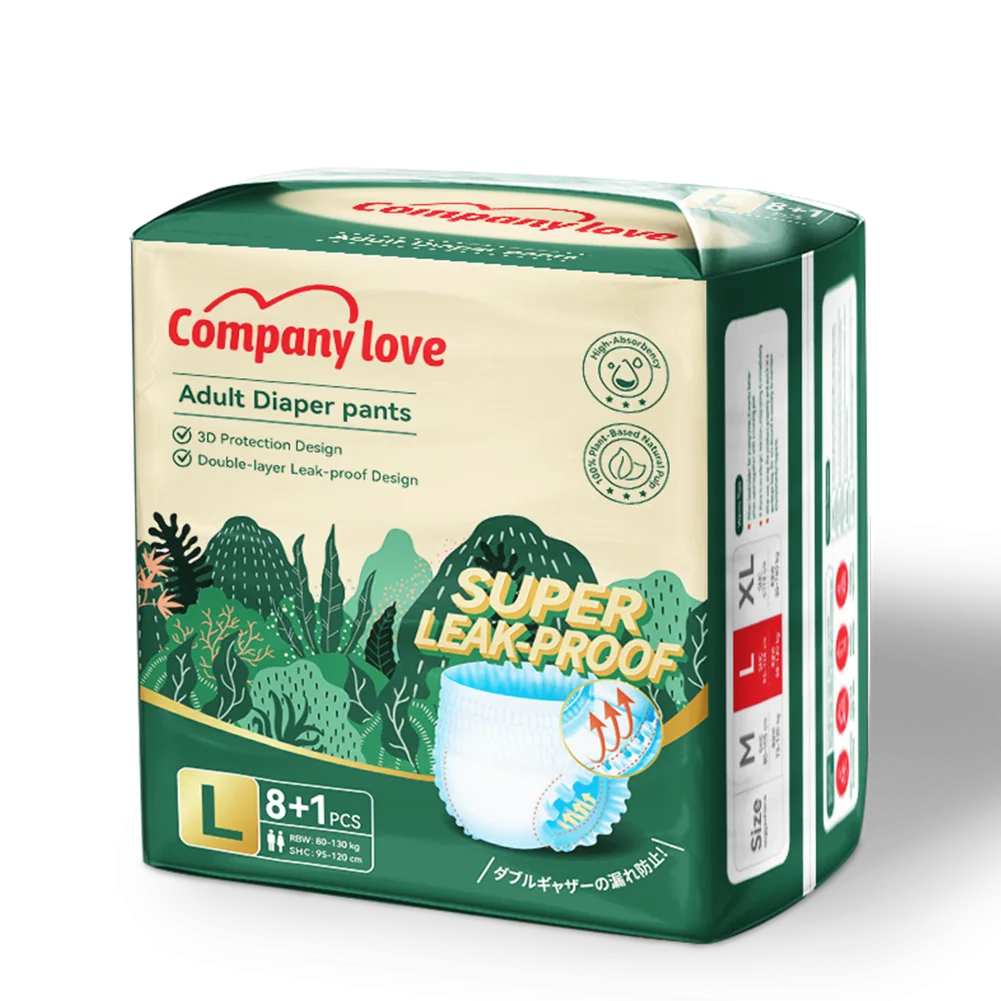
A separate product and packaging route within the same adult incontinence brand range.
Wet wipes, baby diapers and adult incontinence products share private-label and quality-control needs, but each requires a separate product specification, evidence review and destination-market assessment.
The following checkpoints help buyers compare taped briefs and pull-up pants without treating products with different construction or evidence as equivalent.
Record intended user scenario, size range, waist reference, fastening system and daytime or overnight direction.
Request: size chart, product drawing and finished sampleCompare fluff pulp, SAP direction, acquisition layer, distribution, leakage protection and the test method behind performance figures.
Request: component sheet and agreed performance test recordSpecify softness direction, hydrophilic treatment, backsheet structure, breathability and any material restrictions for the destination market.
Request: material declaration and sample reviewReview leg cuffs, waist elastic, refastenable tapes or pull-up waistband, wetness indicator and dimensional tolerances.
Request: construction checklist and measured sampleConfirm bag structure, printing, artwork workflow, barcode, size identification, pack count, carton marks and substantiation for product claims.
Request: dieline, packaging proof and carton specificationDefine approved sample references, incoming material checks, in-process measurements, finished-product sampling and defect reporting before production begins.
Request: agreed QC checklist and inspection evidenceA lower unit price can reflect different dimensions, absorbent-core construction, components, packaging or quality assumptions. Confirm the approved specification, evidence and destination-market requirements before making a commercial decision.
Clear answers make supplier quotations easier to compare and reduce avoidable assumptions.
Share product format, size range, absorbency direction, material preferences, pack count, estimated volume, destination market and branding requirements.
They differ in construction, fit, user scenario, component requirements and often MOQ. The buyer brief should identify the required format before quotations are compared.
Private-label bags, labels and cartons may be available. Printing method, artwork, claims, component MOQ and packaging lead time require confirmation.
Not automatically. Test method, construction and intended use matter. Supplier figures should be reviewed with the product specification and appropriate evidence.
The appropriate documents depend on the destination market and claims. Buyers commonly organize business information, product specifications, material declarations, available test reports, packaging files and production quality records for review. Their relevance and validity still require confirmation.
Use the same size, format and intended-use brief. Record dimensions, weight, construction, fit direction, leakage-control features, packaging and agreed performance checks. Do not compare a single headline absorbency figure without its test method and product construction.
Send your target format, sizes, absorbency direction, packaging, order volume and destination.